
If you sell on Amazon, you probably already know this: one small mistake can turn into a blocked listing, a suspended account, or even frozen funds.
A lot of sellers think Amazon blocks accounts randomly. In reality, Amazon usually reacts to risk. Their system is built to protect customers first — and sellers second.
I’ve seen many accounts run into problems because they ignored small warning signs for too long.
Here are some of the most common reasons Amazon blocks seller accounts and what you can do to reduce the risk.
1. Selling Products Without Proper Authorization
This is one of the biggest mistakes sellers make.
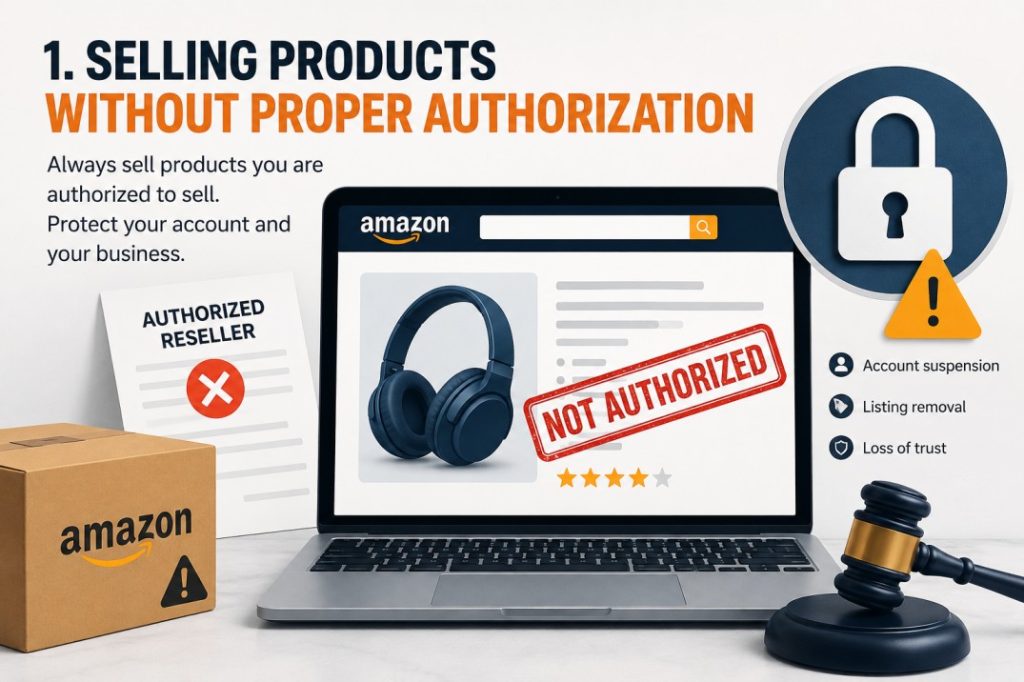
Many people find a trending product, source it quickly, and start selling without checking if the brand allows resellers. Then suddenly they receive an intellectual property complaint or an authenticity request.
Amazon takes these complaints very seriously.
Even if the product is technically real, Amazon may still suspend listings if you cannot provide valid invoices or authorization documents.
Common examples:
- Selling branded products from retail stores
- Using invoices that Amazon does not accept
- Selling restricted brands without approval
- Listing products under the wrong brand name
What helps:
- Work with real distributors whenever possible
- Keep clean invoices with supplier information
- Avoid “test products” from random suppliers
- Save every document before Amazon asks for it
2. Poor Seller Performance Metrics
Amazon constantly monitors seller performance.
If your account starts showing late shipments, cancellations, or unhappy customers, Amazon sees it as a risk to the buyer experience.
A lot of sellers focus only on getting more orders but forget operational problems can destroy the account faster than low sales.
Metrics that matter:
- Order Defect Rate (ODR)
- Late Shipment Rate
- Cancellation Rate
- Valid Tracking Rate
Even a few bad weeks can trigger warnings.
What helps:
- Don’t oversell inventory
- Upload tracking numbers immediately
- Reply to customers quickly
- Avoid unrealistic shipping times
If your operation is still small, keeping things simple is usually better than trying to scale too aggressively.
3. Intellectual Property Complaints
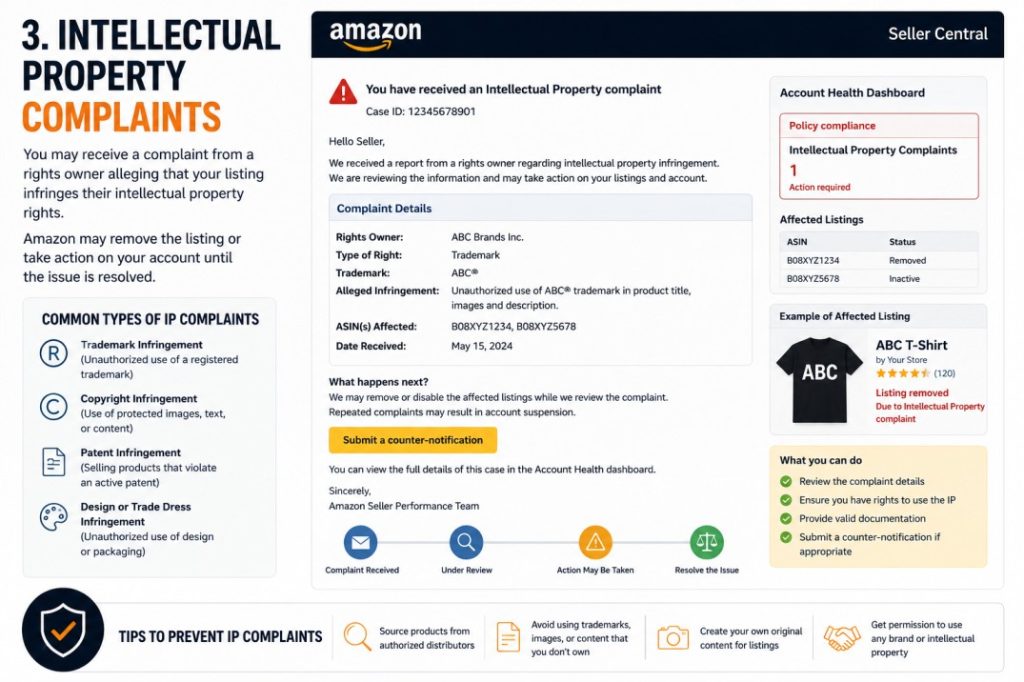
This is probably one of the most frustrating issues for sellers.
Sometimes a seller receives a complaint even when they believe they did nothing wrong.
Amazon often removes listings first and investigates later.
Common causes:
- Using copyrighted images
- Copying another seller’s listing content
- Trademark complaints
- Selling products too similar to protected brands
A single complaint may not destroy an account, but repeated complaints can become a serious problem.
What helps:
- Create your own images whenever possible
- Avoid copying bullet points from competitors
- Research trademarks before launching products
- Monitor account health regularly
4. Authenticity Verification Problems
Amazon frequently asks sellers to prove products are authentic.
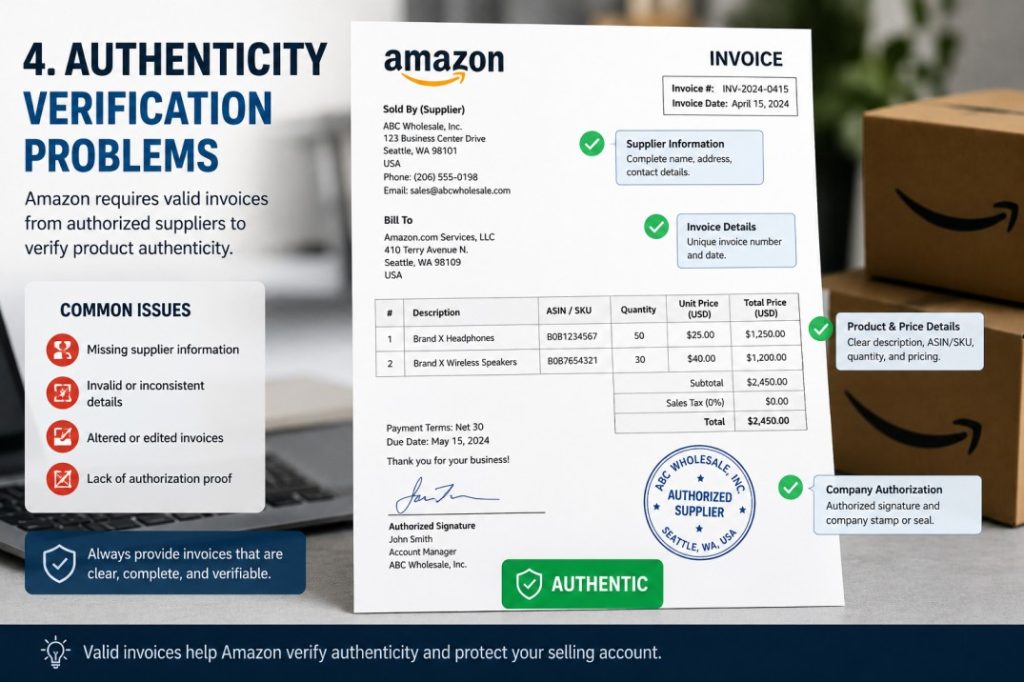
If you cannot provide acceptable documentation, listings may be removed immediately.
This happens often with:
- Beauty products
- Supplements
- Electronics
- Trending products
A lot of sellers underestimate how strict Amazon can be with documentation.
Amazon may request:
- Supplier invoices
- Authorization letters
- Manufacturing information
- Supply chain verification
What helps:
- Organize invoices from day one
- Avoid suppliers with incomplete documentation
- Make sure supplier names and addresses are visible
- Keep consistent inventory records
5. Suspicious Account Activity
Sometimes accounts get flagged because Amazon detects unusual behavior.
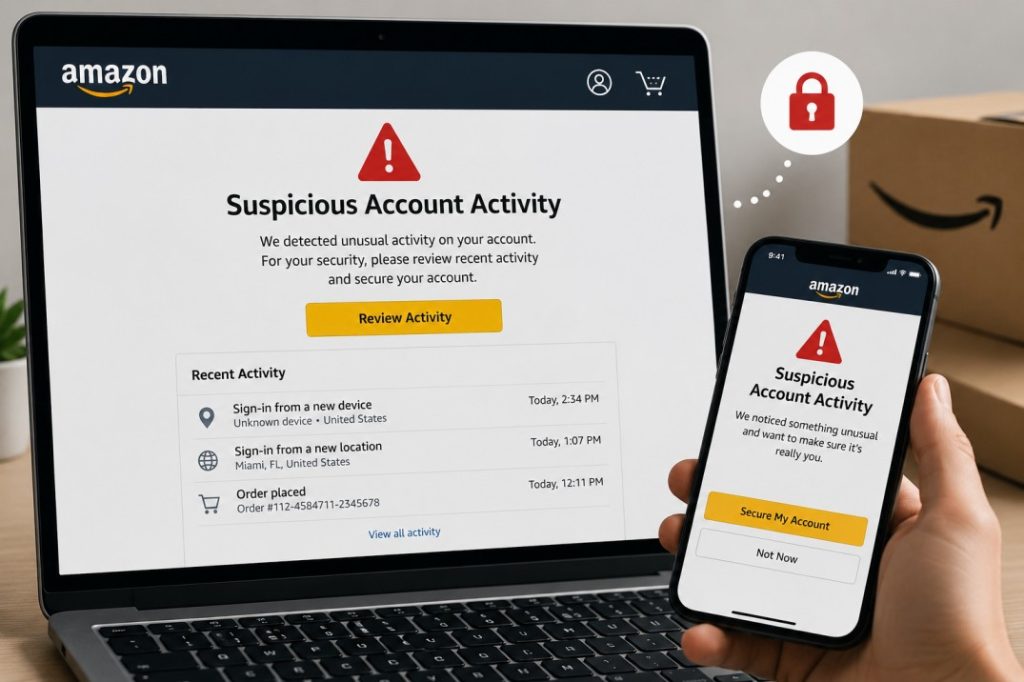
This does not always mean fraud. Sometimes sellers accidentally trigger security systems themselves.
Examples:
- Logging in from multiple countries
- Using unstable VPNs
- Multiple seller accounts connected incorrectly
- Frequent banking changes
- Sudden spikes in sales
Amazon’s system is heavily automated, so unusual patterns can create problems very quickly.
What helps:
- Keep account information consistent
- Avoid unnecessary account changes
- Use secure devices and networks
- Verify all banking and identity information carefully
Final Thoughts
Most Amazon suspensions do not happen because of one giant mistake.
Usually it’s several small problems building up over time:
- weak documentation,
- risky sourcing,
- poor account management,
- or ignoring performance warnings.
The safest strategy is to treat your Amazon account like a real business from the beginning, even if sales are still small.
A suspended account can stop momentum overnight.
If you’re currently dealing with blocked listings, policy warnings, or account health issues, I can help you review your account and identify possible risks before they become bigger problems.